
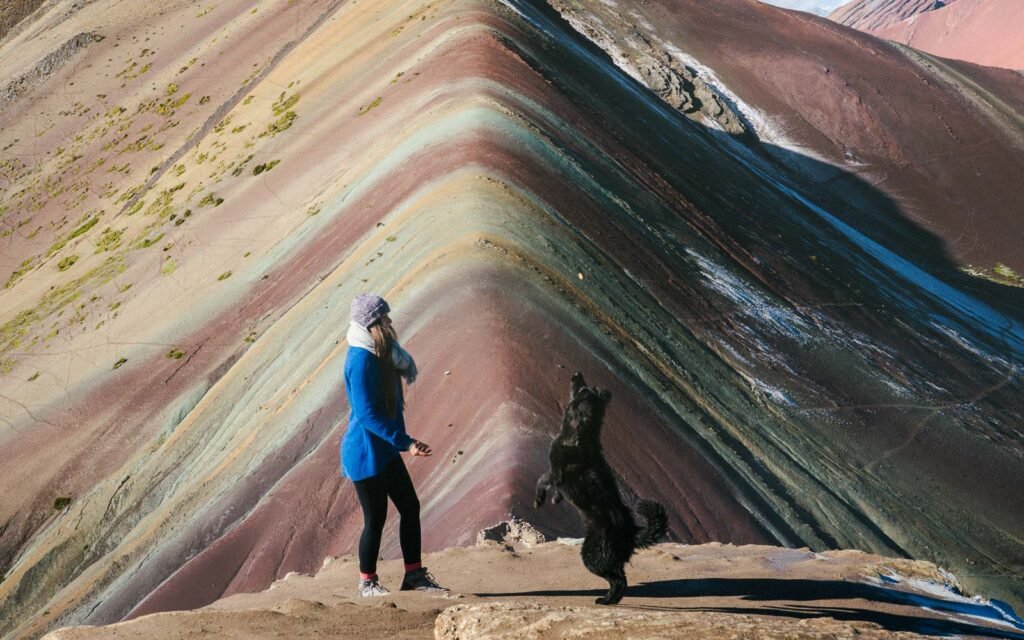
Rainbow Mountain (Vinicunca) is real, and its colors are natural. But it does not look like most photos online. Many of those photos have extra saturation. In person, the colors are softer: red, ochre, mustard, a little green and white.
The colors look strongest with one combination: wet soil and sunlight together. That happens most in the rainy season, after a light rain when the sun comes back out. Wet soil with no sun looks flat and dull. Harsh sun on very dry soil is not much better.
We guide photographers on this trail often. This guide shows what the mountain looks like straight from the camera, how high it is, and how to get good photos up there.
Is Rainbow Mountain real or edited?
The mountain is real. The colors you see in many online photos are not. Travel ads often push saturation so much that the stripes look like paint.
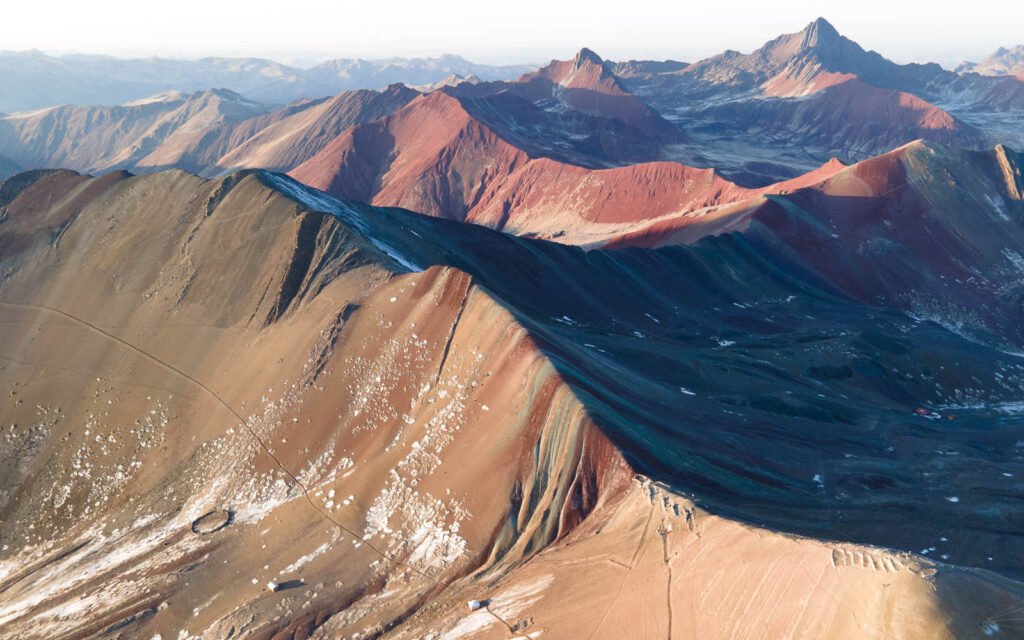
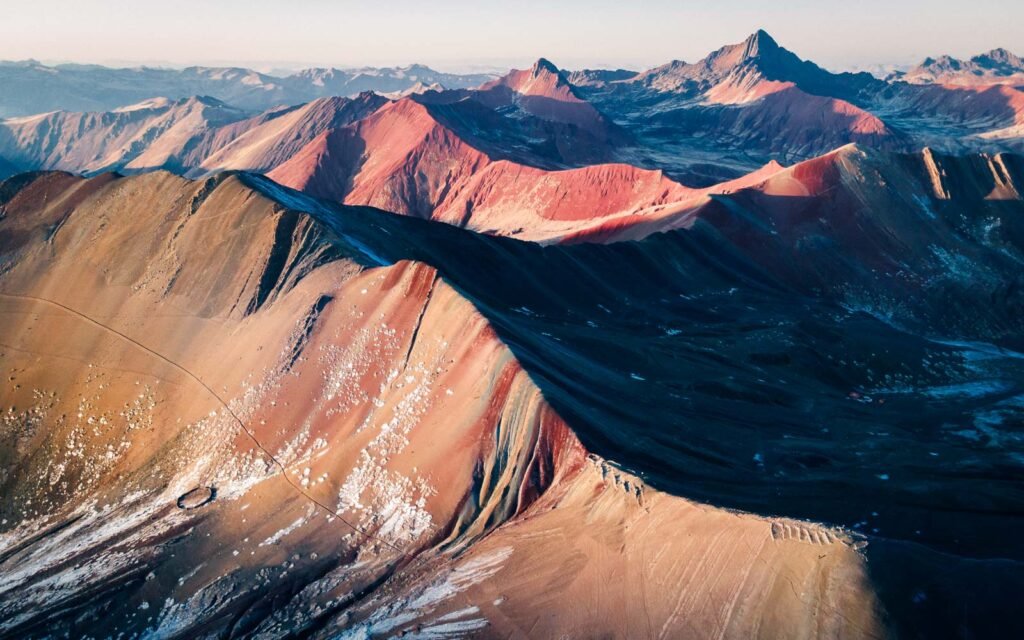
Three things change how colorful it looks on the day:
- Light. Cloud cover gives even light and richer color. Strong midday sun flattens the stripes and shows fewer colors.
- Moisture. Wet ground after a light rain shows deeper color than dry dust.
- Snow. In the rainy months, snow can cover part or all of the stripes for a few hours or days. If it snows in the dry season, wait before you go. Snow melts slowly then and can stay for days or even weeks. The strong contrast between white snow and bright sun also makes the stripes very hard to photograph.
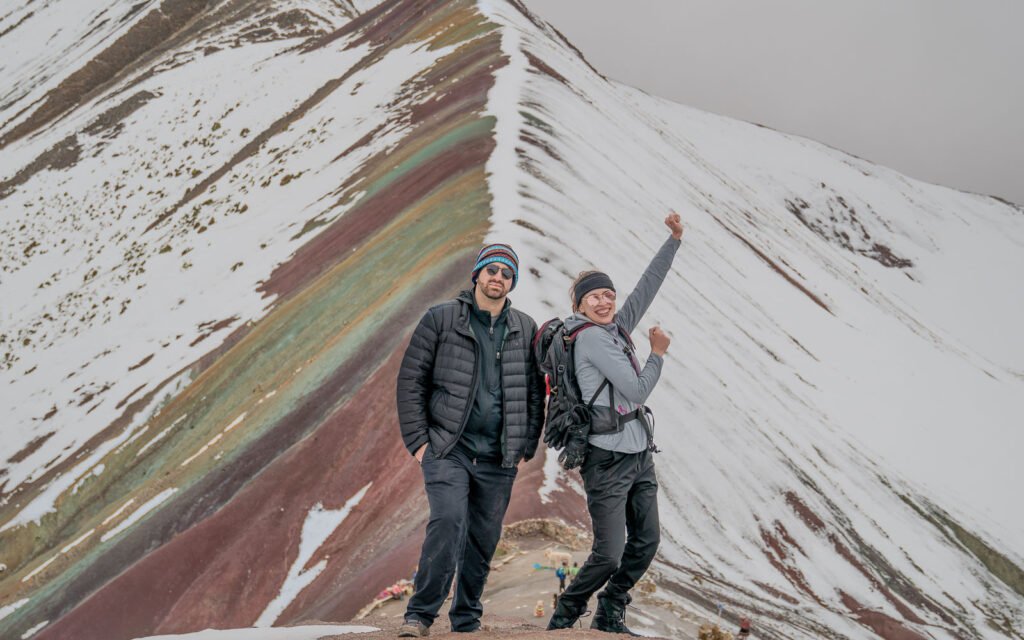
If you want to see the real look before you go, search for “unedited” photos, or ask us for straight-out-of-camera files from our last trip.
Why is Rainbow Mountain colorful?
The stripes are layers of sediment with different minerals. They formed under the sea in different periods of time. When the Andes rose, these layers were pushed up and tilted. Wind and rain then wore the surface down and exposed them.
| Color | Main cause |
|---|---|
| Red / pink | Iron oxide (rust) |
| Yellow / mustard | Iron sulfide and limonite |
| Green / turquoise | Clays rich in iron, magnesium and copper |
| Brown | Goethite / oxidized limonite |
| White | Sandstone and limestone |
Nearby, the Red Valley is almost all red for the same reason: iron in the rock.
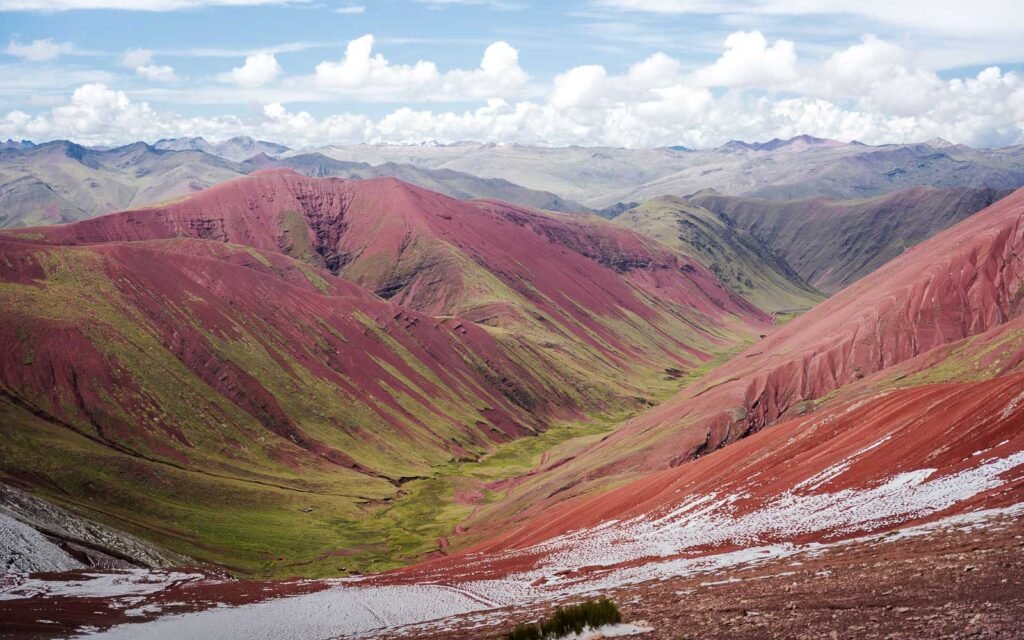
A note from the people who live here. Many websites say the mountain was under a glacier until a few years ago. The families who live around Vinicunca tell a different story. They say this land was used for farming and herding for at least three generations. Their families moved up to these high places to escape the abuse of the old landowners, the hacendados, and to live free.
How high is Rainbow Mountain?
The summit viewpoint is 5,036 m (16,522 ft). You may see 5,200 m on some signs and websites, but that number is not correct.
The main trail starts at the Q’ayrawiri parking area, at about 4,600 m (15,090 ft). You climb roughly 440 m.
- Round trip: about 7 km (4.3 miles)
- Uphill: 1.5–2 hours at a slow pace
- Downhill: about 1 hour
- Drive from Cusco: 3.5–4 hours each way
For comparison, Cusco is about 3,400 m (11,150 ft) and the Machu Picchu citadel about 2,430 m (7,970 ft). If you are planning both, see our guide to the best time to visit Machu Picchu.
How hard is the hike, and is it worth it?
The distance is short. The altitude is what makes it hard. Most people walk slowly and stop often in the last 30 minutes, where the trail gets steep.
It is worth it if:
- You have spent at least 2–3 days in Cusco or the Sacred Valley first.
- You are fine with a very early start, or you go in the afternoon for sunset.
- You accept that weather can hide the colors on some days.
If you want the colors with less effort and fewer people, look at Palccoyo. Its viewpoints are about 4,900 m, but you gain no more than about 150 m on the whole walk, and you get many more angles for photos. See our guide on which Rainbow Mountain is best for photography.
Best time to visit Rainbow Mountain
| Season | Months | What to expect for photos |
|---|---|---|
| Dry | April–September | Blue sky, cold mornings (below 0 °C), dry trail, more crowds, harsh light by late morning |
| Shoulder | October and March | Mixed sky, clouds that soften the light, fewer people |
| Rainy | November–February | Wet soil and sun give the strongest color, but higher chance of snow or fog and a muddy trail |
Time of day matters more than the month. Most groups reach the top between 8:00 and 10:00 am. The light is still good then, but you can share the main viewpoint with a thousand people or more. Arrive before the main groups, or stay after they leave, and you get space for your tripod and clean compositions.
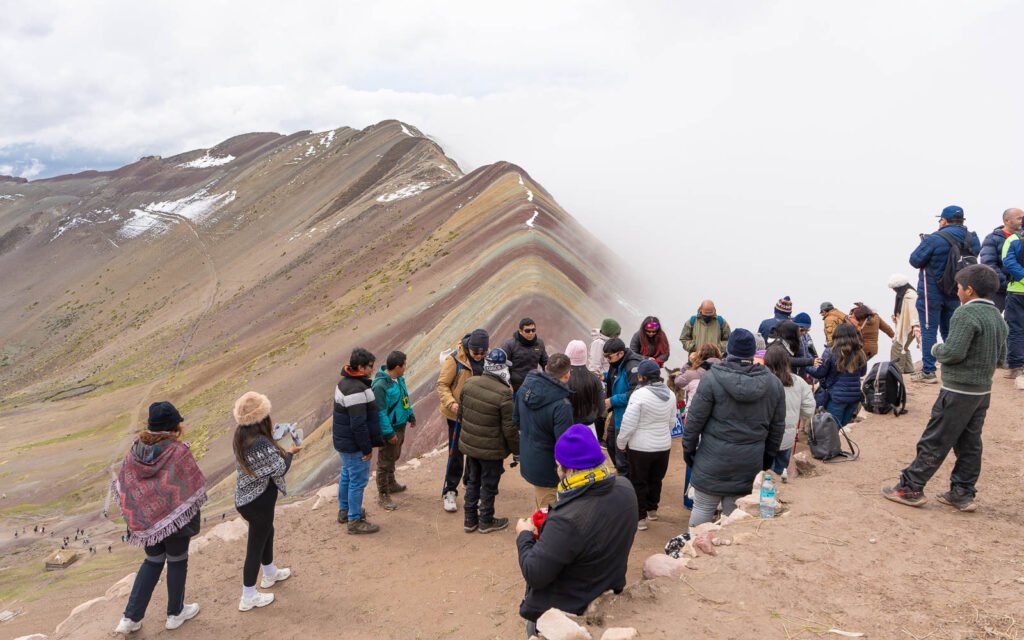
We prefer the afternoon and sunset here. The day groups are gone, and you have time to walk around and find your angle before the best light.
Photography tips for Rainbow Mountain
- Shoot RAW. You will need to correct white balance and add a little contrast. Keep the edit close to what you saw.
- Use a polarizer to cut glare on the rocks and deepen the sky. Turn it slowly; too much makes the sky uneven at this altitude.
- Do not shoot only the main view. Walk to the ridge above the viewpoint for a higher angle. The Red Valley side gives a different photo most people miss.
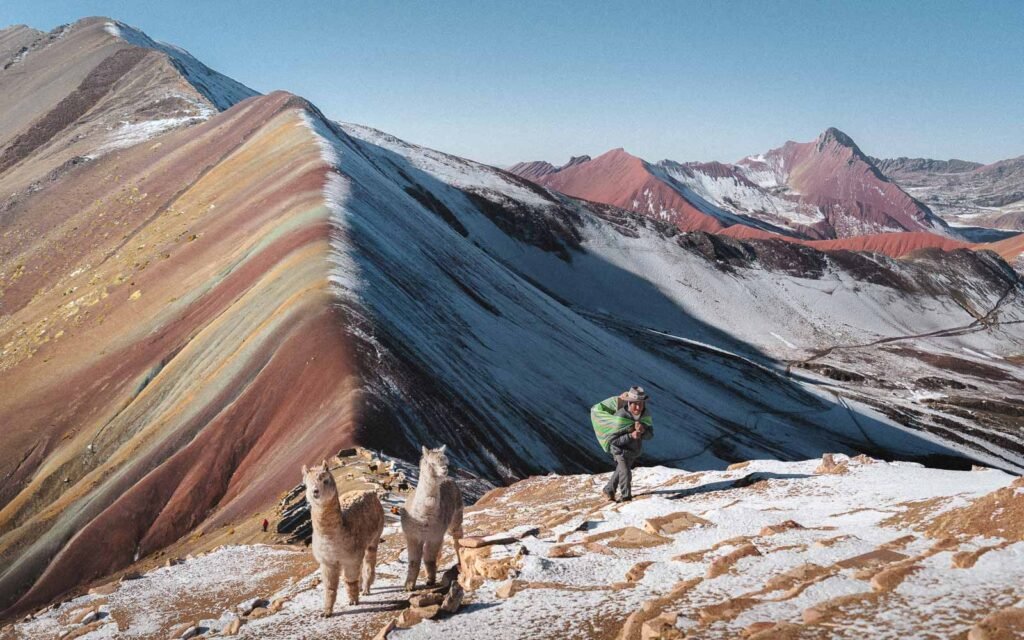
- Add scale. A hiker, a llama or a local herder makes the mountain look bigger. Always ask before photographing people, and offer a fair payment.
- Protect batteries. Cold drains them fast. Keep spares in an inside pocket.
- Drones are allowed for now. Pay the park rangers a set fee (S/50 at the time of writing) and they give you a permit ticket. You can usually fly for 10–15 minutes only, so plan your shots and choose the best moment to go up. Rules can change, so ask at the entrance.
What to bring
- Headlamp, if you stay for sunset.
- A hiking pole, especially if you hike alone. After sunset, the local dogs change into guard mode. Most are not aggressive, but now and then you meet one that is.
- A rain cover for your camera and bag, in any season.
- Gloves, a warm hat and layers.
- Snacks for a full day, in case you find a new angle and want to stay longer.
- Do not eat at the top. Water and hygiene conditions up there are basic and can upset a foreign stomach. Bring your own food and water.
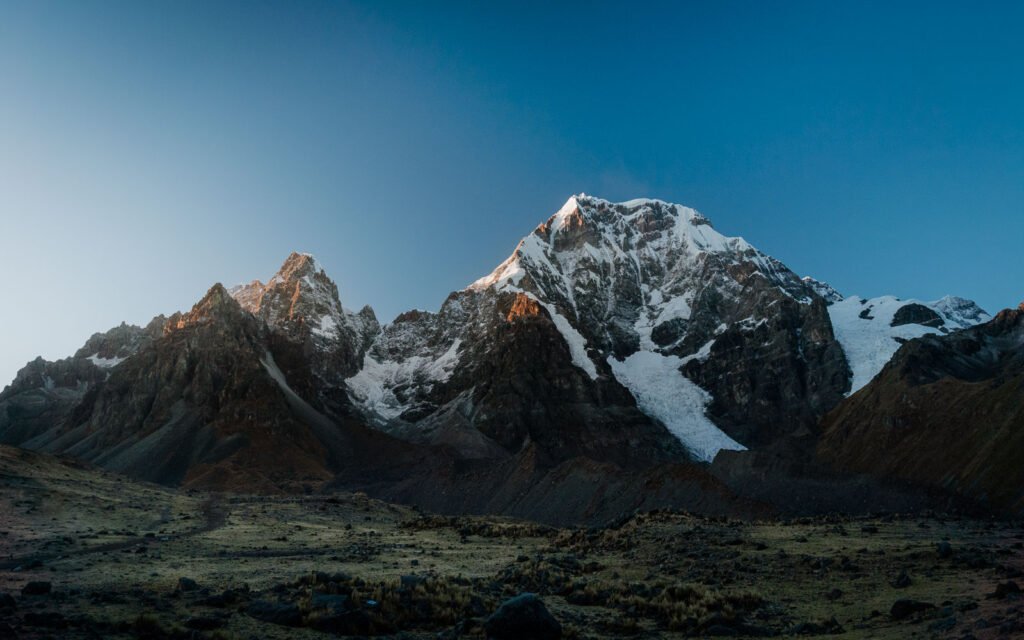
Ausangate, the snow peak next to Rainbow Mountain, is worth its own trip. See our 7 Lakes of Ausangate and Upis photography tour.
Want to photograph Rainbow Mountain in the afternoon light, with fewer people and a guide who knows the angles? See our Rainbow Mountain and Ausangate 3-day photography expedition.
FAQ
How much is the entrance to Rainbow Mountain?
The local community charges an entrance fee per person, paid in cash at the trailhead. Bring soles in small notes.
Can I go by horse?
Yes. Local families rent horses for most of the way up. The last steep part is on foot.
Is it cold?
Yes. Early mornings are often below 0 °C, and wind is strong at the top. Bring layers, gloves and a hat.
Can I fly a drone at Rainbow Mountain?
Yes, for now. The park rangers sell a permit ticket for a set fee, S/50 at the time of writing. Flights are short, usually 10–15 minutes.
Can I see Rainbow Mountain and Machu Picchu on the same day?
No. They are in opposite directions from Cusco. Plan separate days.