
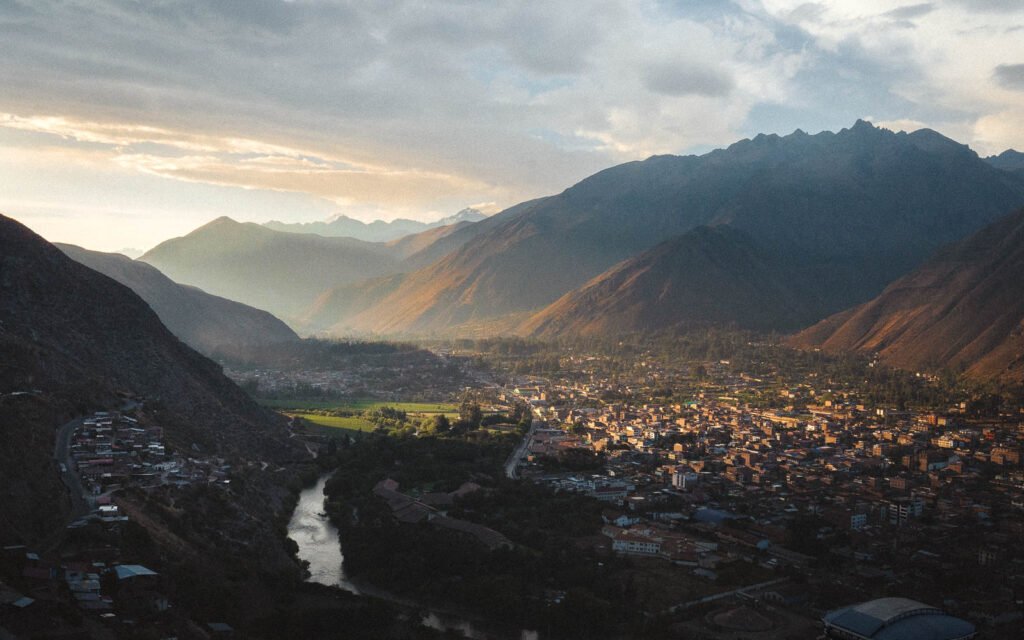
The Sacred Valley in Peru is not one place. It is a valley about 60 km long, from Pisac to Ollantaytambo, along the Urubamba River. That is why some people also call it the Urubamba Valley. “Sacred Valley” is mostly a tourist name. The tourist route also includes places on the high plateau above it, like Chinchero, Moray and the Maras salt pans.
Because it is so spread out, it is better to plan by specific places, not by “the valley”. Most of the valley floor sits around 2,800–2,970 m, lower than Cusco. The plateau sites are as high as Cusco or higher.
This guide covers what to see, how to get there, the altitude of each place, the weather by season and the best hour to photograph each stop.
What is the Sacred Valley known for?
- Inca sites: Pisac terraces, Ollantaytambo fortress, Moray’s circular terraces.
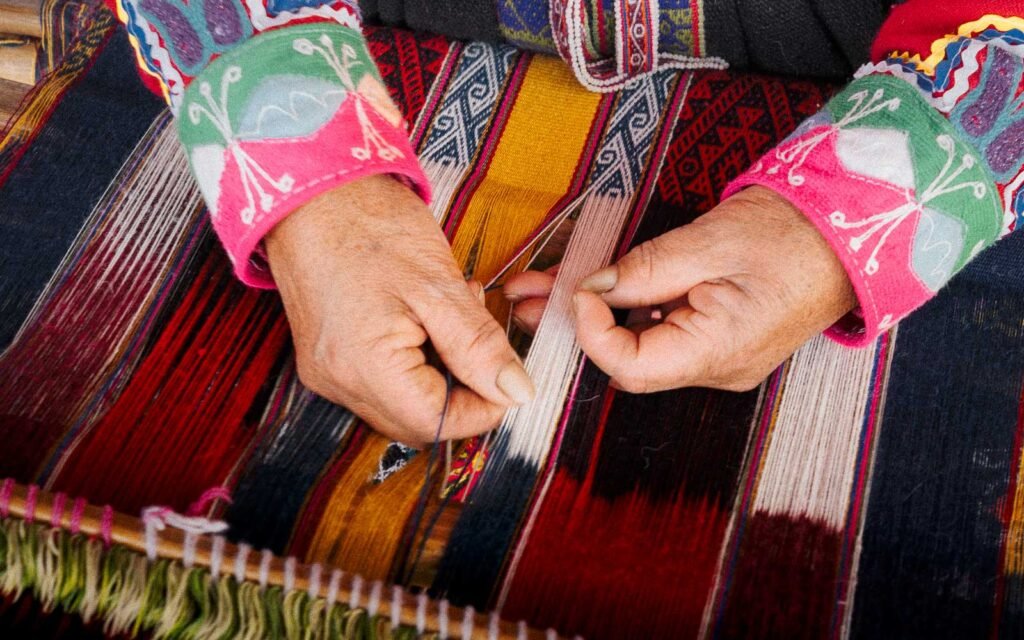
- Living villages: people still farm, weave and speak Quechua.
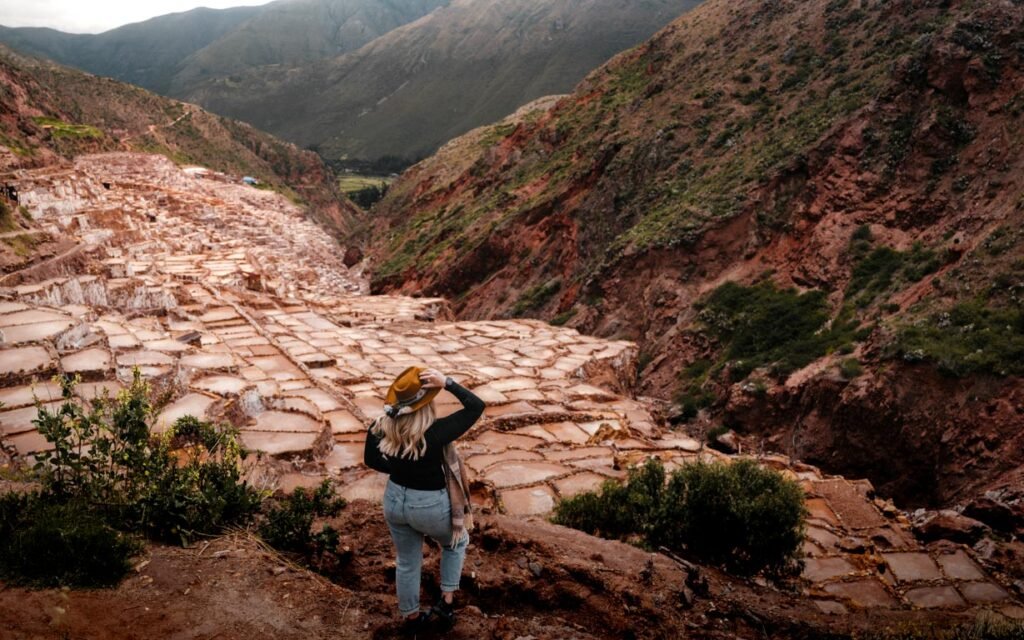
- Maras salt pans: thousands of small salt pools on a hillside, run by local families.
- Landscape: green fields along the river under the snow peaks of the Urubamba mountain range. The main peaks are Sahuasiray (5,818 m), Verónica (5,682 m), Chicón and Pumahuanca.
- The train to Machu Picchu: it leaves from Ollantaytambo.
- A slower pace: good coffee shops and restaurants with a calm feel. You can spend a full day in one town, and even work from there in comfort.
How to get to the Sacred Valley from Cusco
There are two main roads:
- Via Pisac (north of Cusco): the road goes straight down to Pisac, about 33 km, at the east end of the valley. From there you follow the river west to Calca, Urubamba and Ollantaytambo.
- Via Chinchero (northwest of Cusco): the road crosses the high plateau through Chinchero, with turns to Maras and Moray, and comes down to Urubamba.
Shared vans (colectivos) and taxis leave Cusco on both roads. A private car lets you stop at viewpoints and time each place for the light.

Altitude of the Sacred Valley
| Place | Altitude | Note |
|---|---|---|
| Ollantaytambo | ~2,790–2,850 m | Lowest main town |
| Urubamba | ~2,870 m | Main town in the middle |
| Calca | ~2,930 m | Valley floor |
| Pisac (town) | ~2,970 m | Ruins above at ~3,300 m |
| Maras salt pans | ~3,300 m | On the slope above the valley |
| Moray | ~3,385 m | Plateau |
| Chinchero | ~3,760 m | Higher than Cusco |
| Cusco (for reference) | ~3,400 m | Base for most tours |
Many travelers sleep in the valley for their first nights because it is lower than Cusco. Visits to Chinchero and Moray feel like Cusco altitude.
Weather in the Sacred Valley by season
| Months | Season | What it means for photos |
|---|---|---|
| May–September | Dry | Clear sky, cold nights, warm sunny days; fields turn golden and brown |
| October–November | Shoulder | First rains, clouds build in the afternoon, fields start to turn green |
| December–March | Rainy | Very green valley, dramatic clouds, rain often in the afternoon |
| April | Shoulder | Still green, rain fading; one of the best months for color |
Days are mild at this altitude; nights get cold, especially June to August.
Best time of day to photograph each place
The valley is enclosed by high mountains, so the sun reaches the valley floor later in the morning and leaves earlier in the afternoon than on the plateau.
| Place | Best light | Why |
|---|---|---|
| Ollantaytambo | Early morning | Light on the fortress terraces and old town streets, before the crowds |
| Pisac ruins | Morning and afternoon | Side light shapes the terraces. The ruins sit high above the town, so they keep good light late in the afternoon. Hike to the less visited sectors |
| Moray | Morning or late afternoon | Low light gives depth to the circles |
| Maras salt pans | Morning, or from about 3 pm | Softer side light on the pools; midday light is flat |
| Chinchero / plateau viewpoints | Sunset | Open sky facing the snow peaks and a long golden hour |
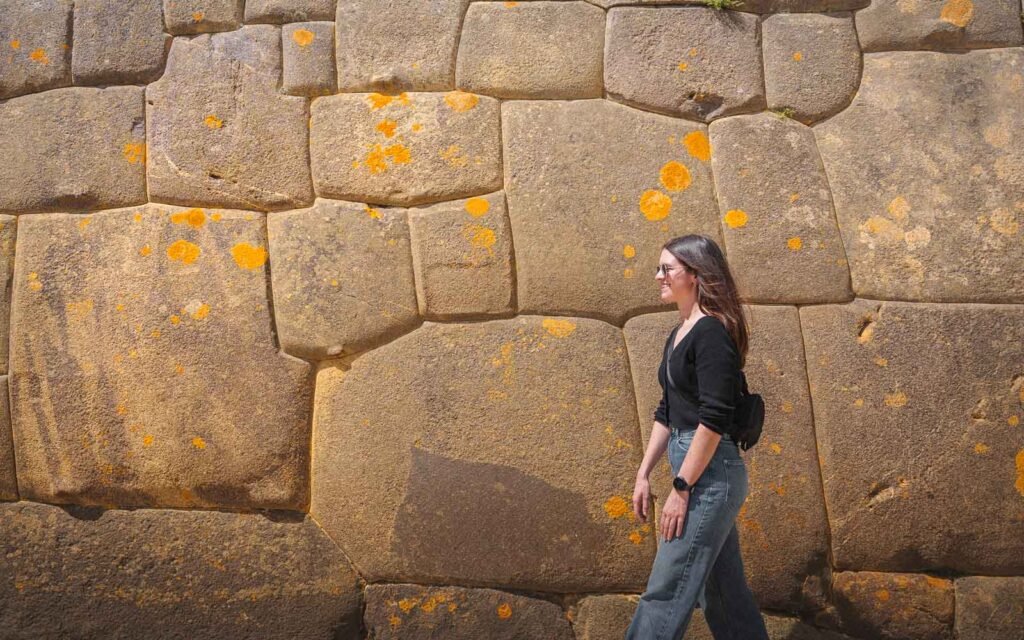
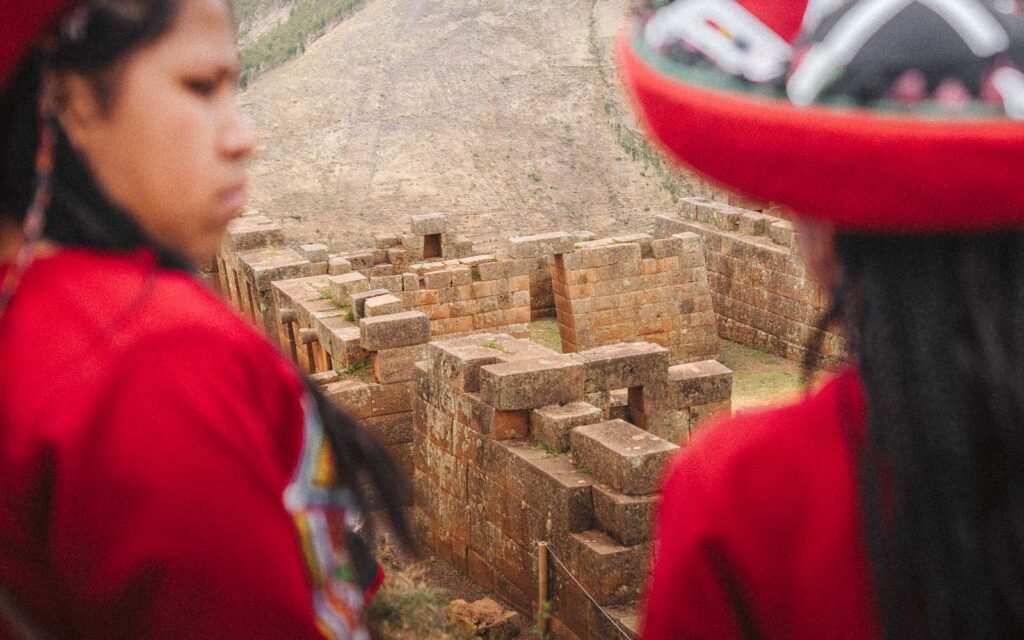
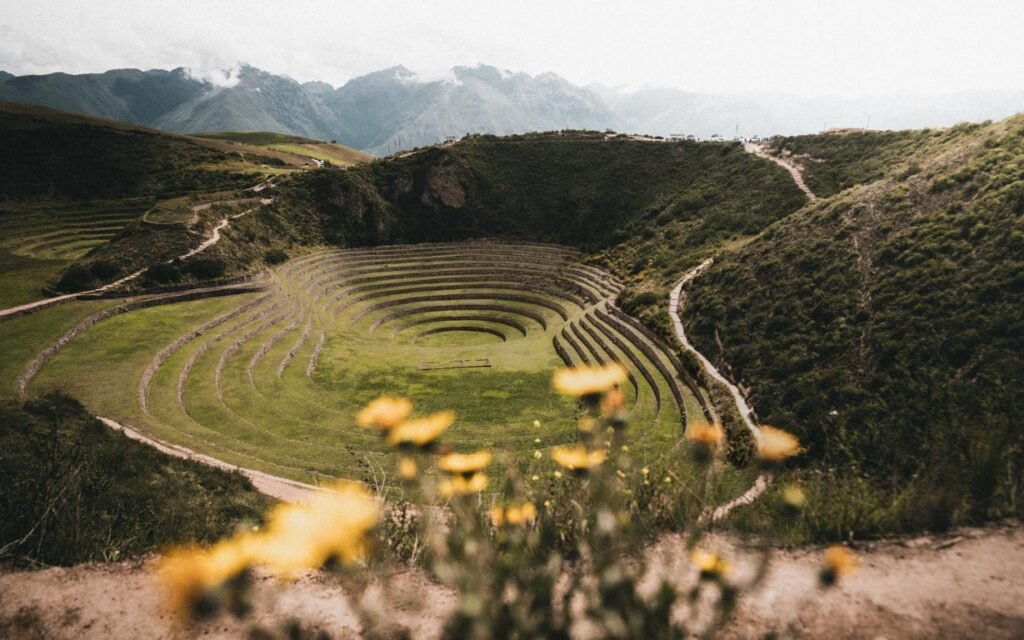
Want a guide who plans each stop around the light? See our 4-day Cusco Bucket List photography tour.
Is Machu Picchu in the Sacred Valley?
No, but it is connected. Machu Picchu is further down the same river, about 1.5 hours by train from Ollantaytambo. Many people combine one day in the valley with Machu Picchu the next day. Read our guide to the best time to visit Machu Picchu.
How many days do you need?
- 1 day: a full day tour covers Pisac, Ollantaytambo and Chinchero, or Maras and Moray.
- 2 days: see both sides of the valley at a slower pace, with good light at each stop.
- 3 days: add a village visit or a portrait session with a local family, and a free morning for photography.
For photography, 2 days is the minimum we recommend. In one day you visit some places at the wrong hour. Pisac is also the farthest from the other sites, so in one day you spend more time driving than taking photos.
Entrance tickets
- Cusco Tourist Ticket (Boleto Turístico): covers Pisac, Ollantaytambo, Chinchero and Moray. There is a partial Sacred Valley ticket and a full ticket for all sites in and around Cusco.
- Maras salt pans: separate entrance paid to the community, in cash.
Photography tips for the Sacred Valley
- Plan each place by its light. A normal tour visits the popular spots at fixed hours. Do not expect different angles or good light that way.
- Walk away from the road. A short 20–30 minute hike from the parking area often gives you angles most visitors never see.
- Ask before photographing people, especially in markets and villages. Offer a fair payment or buy something. Many families welcome it when you ask first.
- Use a telephoto at Maras and Moray. It pulls out patterns in the pools and terraces.
- Watch the afternoon clouds in the rainy season. They often break near sunset and give strong light on the peaks.
- Drones: archaeological sites do not allow them. Fly only in open areas where it is permitted, and ask first.
FAQ
Is the Sacred Valley safe?
Yes, it is one of the calmest areas around Cusco. Use normal care with your gear in markets.
Is the Sacred Valley worth visiting?
Yes. It has more variety for photography in one area: landscape, people, ruins and textures.
Should I go to the Sacred Valley or Cusco first?
Many travelers start in the valley. It is lower and easier for acclimatization, and you get local contact and colorful markets from day one.
How far is it from Cusco?
About 1 to 1.5 hours by car, depending on which town you go to first.